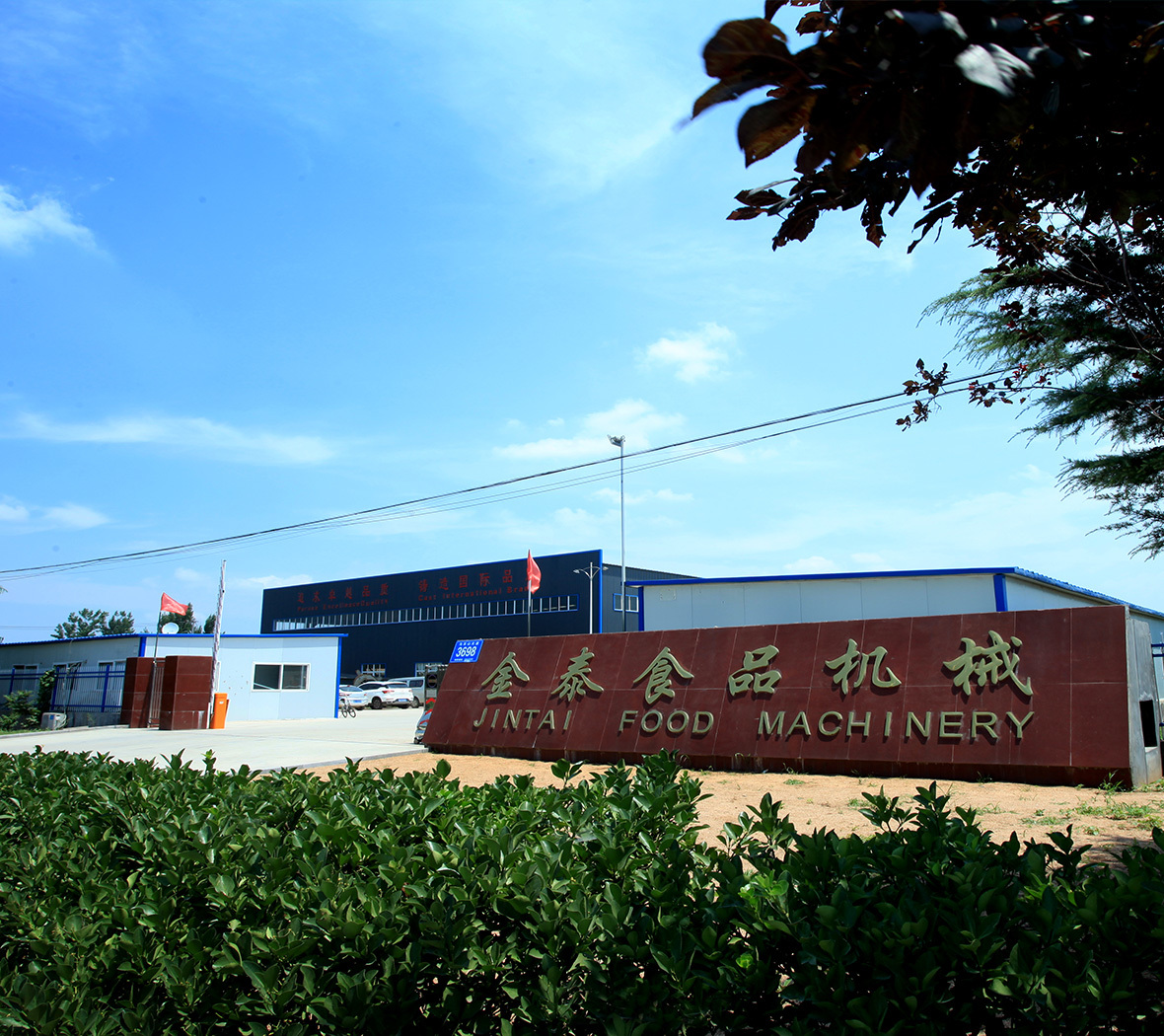
Jintai Food Machinery
Food steaming and sterilization solutions provider

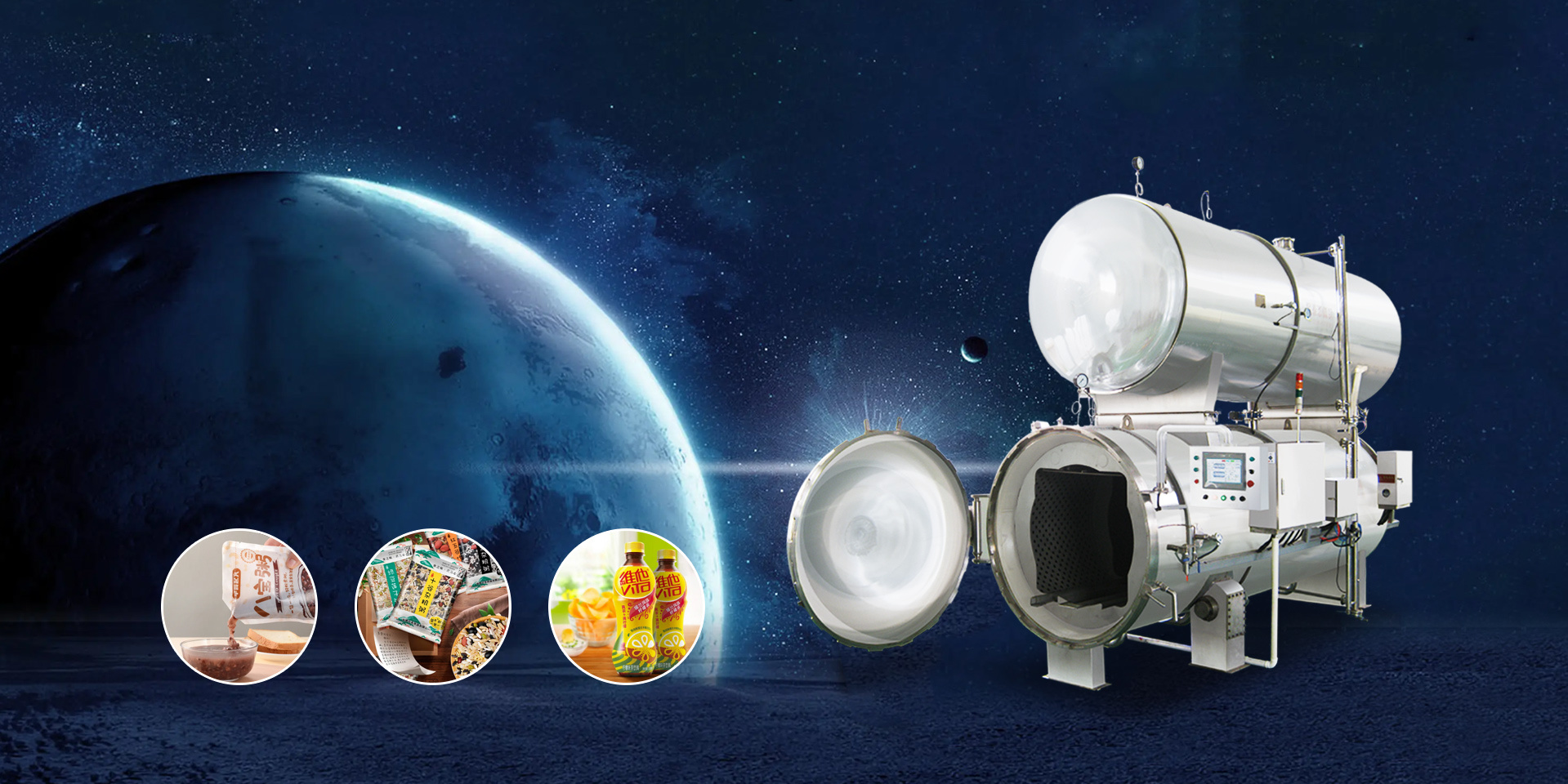
Rotary sterilization pot (steam‑type or hot‑water circulation type)

MORE +
Jintai Food Machinery
Food steaming and sterilization solutions provider

Two‑plus‑one hot‑water circulation (water‑bath) sterilization kettle

MORE +
scroll down

Product Center

The manufacturer’s product line includes sterilization pots/sterilization kettles, jacketed kettles, steaming and boiling kettles, and agitated frying pans.


Solution Category

The product is primarily used for the sterilization of various food products, including meat products, egg products, dairy products, seafood, and canned goods.


Vacuum Packaging Solutions for Meat Products

Vacuum Packaging Solutions for Meat Products

Prepared Meal Solutions

Prepared Meal Solutions

Bottled (and Canned) Beverage Solutions

Bottled (and Canned) Beverage Solutions

Meal-kit solution

Meal-kit solution

Canned Luncheon Meat Solution

Canned Luncheon Meat Solution

Bagged Zongzi Solution

Bagged Zongzi Solution

Bagged Porridge Solutions

Bagged Porridge Solutions

Bagged Corn Solution

Bagged Corn Solution

Pet Food Solutions

Pet Food Solutions

Bottled Bird’s Nest Solution

Bottled Bird’s Nest Solution

Step into Jintai

Create markets through technology, serve customers with quality, and grow the market through service.

Zhucheng Jintai Food Machinery Co., Ltd. is one of the earliest manufacturers of sterilization kettles in China. Its product lineup encompasses eight major series—covering over 200 models—including zongzi sterilization equipment, double‑layer water‑bath sterilization kettles, sterilization vessels, soybean‑product processing lines, meat‑product sterilization systems, planetary‑mixing stir‑fry pans, food‑sterilization equipment, beverage‑sterilization systems, sterilization kettles, and jacketed kettles. The company’s business philosophy is: “Create markets through technology, serve customers with quality, and grow the market through service.”

View more +

Tongyu Construction
2008 +

Company establishment

Establishment
501 +

Registered capital: 5.01 million yuan

Funds
150 +

Professional and technical personnel

Technical personnel
30000 +

The company occupies an area of 30,000 square meters.

Sales network

Technological Leadership, Industry Benchmark

A brand is a symbol of credibility and strength, a banner that unites determination and talent.

Image Name

Partner

Image Name
Image Name
Image Name
Image Name
Image Name
Image Name
Image Name
Image Name

News Updates

Stay up to date with the latest news from Jintai Machinery and watch fresh industry‑related video updates.


Sterilization kettle: the core thermal sterilization equipment in the food processing industry.

Sterilization Kettles: The Core Thermal Sterilization Equipment in the Food Processing Industry In the industrial production processes of numerous food categories—including pre-packaged foods, seasonings, and leisure‑style braised products—ensuring an extended shelf life at room temperature and safeguarding food safety hinges on a standardized thermal sterilization step. As the central piece of equipment for this process, the sterilization kettle employs precise coordinated control of temperature and pressure to sterilize packaged foods without compromising their original flavor or texture. Today, it has become a widely adopted, critical production asset throughout China’s food processing value chain, supporting large‑scale, stable manufacturing for countless food enterprises. Many professionals in the food industry initially view sterilization kettles through the simplistic lens of a “high‑temperature steaming vessel.” In reality, however, they are sophisticated, closed‑loop thermal systems that integrate temperature regulation, pressure equalization, and media circulation. At their core, these systems create a uniform heat‑exchange environment within a sealed chamber, ensuring even heat penetration into every item being sterilized. Simultaneously, a back‑pressure control mechanism balances the pressure differential between the inside and outside of the package, preventing bag ruptures or bottle breakage during high‑temperature sterilization. This systematic design effectively addresses the issues of uneven heating and packaging damage inherent in traditional open‑type steaming equipment.

2026-07-28

Sterilization Pot: A Key Sterilization Device in the Food Processing Workflow

Sterilization Pot: A Key Sterilization Device in Food Processing In the industrial production chain of food processing, to extend the shelf life of packaged foods at ambient temperatures while preserving their original flavor and quality, it is essential to subject them to a standardized sterilization process that reduces microbial loads and prevents spoilage during storage. As a core piece of equipment specifically designed for this purpose, the sterilization pot creates a stable temperature‑pressure environment within a sealed chamber to sterilize packaged products. It helps food manufacturers standardize their sterilization procedures, ensuring that finished products meet regulatory requirements before entering subsequent distribution stages. The fundamental operating principle of the sterilization pot is to establish a uniform, stable high‑temperature environment inside a fully sealed chamber, enabling heat to be evenly transferred into each individual package. The chamber can accommodate multiple batches of products, and through various heat‑transfer media, the heat circulates thoroughly throughout the interior, ensuring that every item receives consistent thermal exposure and eliminating localized overheating. The entire sterilization process takes place in a closed system, preventing external microorganisms from entering and interfering with the treatment. Once sterilization is complete, the products are allowed to cool naturally, after which they can…

2026-07-16

Sterilization Kettle: A Reliable Piece of Equipment for the Sterilization Process in the Food and Processing Industries

Sterilization Autoclaves: Reliable Equipment for the Sterilization Stage in the Food and Processing Industries In the food, beverage, and other processing sectors where microbial safety must be rigorously controlled, sterilization is a critical step that ensures product compliance and extends shelf life. As the specialized equipment dedicated to this process, the sterilization autoclave’s operational stability, uniformity of temperature and pressure, and ease of control directly impact the final quality of each batch—and, by extension, the overall pace of the production line. Accordingly, selecting a sterilization autoclave solution tailored to the specific characteristics of different product categories has become a key consideration during equipment procurement. The autoclave’s overall structural design is fully aligned with the practical demands of industrial‑scale batch sterilization. Its main chamber is constructed from materials that withstand high temperatures and pressures, ensuring structural integrity even under prolonged, repeated cycles of elevated heat and pressure, while minimizing deformation or corrosion. An integrated circulation system promotes uniform flow of the sterilizing medium within the chamber, eliminating localized temperature differentials and ensuring that every item inside receives consistent exposure to the sterilization environment, thereby reducing variations in product quality caused by uneven heating. The sealing mechanism is engineered for long‑term opening and closing, maintaining excellent airtightness even after numerous cycles and preventing unnecessary pressure fluctuations inside the vessel. Different products…

2026-07-06

Food sterilization equipment: an indispensable auxiliary system in modern food processing.

Food sterilization equipment is an indispensable component of modern food processing, playing a key role in physically inactivating microorganisms in raw materials. This ensures compliance with regulatory requirements while extending the shelf life of foods and preserving their original flavor and nutritional qualities as much as possible. Such equipment is versatile, offering tailored solutions for a wide range of food categories—from baked goods and liquid beverages to prepared meals and seasonings—making it a critical element in establishing compliant production systems for food manufacturers. In practical food-processing applications, different product types impose distinct requirements on the sterilization process. For heat‑sensitive foods, sterilization must be carried out at relatively mild temperatures to prevent prolonged exposure to high heat from degrading bioactive compounds and compromising natural aromas. In these cases, non‑thermal sterilization technologies can deliver effective results by employing specific physical mechanisms that penetrate the product matrix, achieving rapid microbial inactivation while maintaining the food’s color and texture close to its original state and minimizing the loss of flavor compounds. Meanwhile, for packaged foods intended for long‑term storage at ambient temperatures, appropriate thermal sterilization systems, with precise temperature control, can achieve complete microbial inactivation within prescribed timeframes, thereby meeting commercial sterility standards.

2026-06-26